- Home Page /
- Books /
- Arts & Photography /
- Architecture /
- Buildings /
- Hospital and Healthcare Facility Design Hardc...

Item #:
67986490
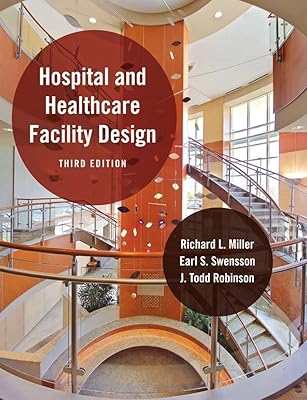
Hospital and Healthcare Facility Design Hardcover Illustrated, April 23, 2012
Item #:
67986490
NOK 1546
Price Details
Excluding Shipping & Custom charges ( Shipping and custom charges will be calculated on checkout )
*All items will import from US
7%
In stock
 Imported from USA store
QTY:
Only 1 item left in stock.
Order now and get it around Wednesday, June 24
Secured transaction
Ubuy works hard to protect your security and privacy. Our advanced payment security system ensures confidentiality by encrypting your information during transmission using AES (Advanced Encryption Standards) and SSL (Secure Socket Layer) protocols. Your payment details are 100% secure as we do not share your payment details with third party sellers.
Our Top Logistics Partners


A celebrated standard for architects, planners, and hospital administrators...

Fast
Shipping

Free
Return*

Secure Packaging

100% Original Products

PCI DSS Compliance

ISO 27001 Certified


Note: Step Down Voltage Transformer required for using electronics products of US store (110-120). Recommended power converters Buy Now.


What Stands Out
Comprehensive Design Insights
Offers an in-depth exploration of innovative hospital design techniques, helping architects and planners create efficient, patient-centered healthcare environments that enhance functionality and comfort.
Illustrative Examples
Richly illustrated with high-quality images, this book provides visual clarity and inspirations, making complex design concepts accessible and stimulating for a diverse audience.
Expert Contributions
Includes insights from leading industry experts, combining theoretical and practical knowledge, ensuring readers are equipped with current trends and best practices in healthcare facility design.
Product Details
- An updated version of a work that has introduced three generations of students and professionals to the state-of-the-art in creating healing environments. A celebrated standard for architects, planners, and hospital administrators, Hospital and Healthcare Facility Design has introduced three generations of students and professionals to the state-of-the-art practice of creating structures that are healing environments for those who are ill, while promoting wellness and comfort for all who use them. The third edition of this comprehensive work includes all new case studies and updated text providing innovative ideas and practical guidelines for planning and designing facilities in the rapidly changing landscape of the healthcare world. Drawing on some fifty years of experience at one of the country’s leading healthcare architecture firms―Earl Swensson Associates (ESa)―authors Richard L. Miller, FAIA, Earl S. Swensson, FAIA, and J. Todd Robinson, AIA, explore the current and emerging trends in medical care, technology, and delivery as practiced in a rich cross section of examples of healthcare facilities from around the country. In this new edition they touch on such topics as Lean and LEED practices, evidence-based design, Planetree design, and other important issues facing contemporary and future designers. They expand coverage of the increasingly important topics covered in previous editions, such as women’s and children’s healthcare and care for the elderly. This new edition also explores the latest thinking on everything from vast new medical campuses to continuous-care retirement communities and from freestanding facilities to template designs for networks of hospitals. In short, the authors take a fresh look at the latest advances in the field and explain how these advances are affecting the design of hospitals and other healthcare facilities and the resulting impact for the future. 250 full-color and 25 black-and-white illustrations
| Publisher | W. W. Norton & Company |
| Publication date | April 23, 2012 |
| Edition | Third |
| Language | English |
| Print length | 400 pages |
| ISBN-10 | 0393733092 |
| ISBN-13 | 978-0393733099 |
| Item Weight | 4.16 pounds (1.89 kg) |
| Dimensions | 9 x 1.3 x 11.3 inches (22.9 x 3.3 x 28.7 cm) |
Who Should Buy?

-
Healthcare Architects
Provides essential insights and innovative ideas for architects specializing in designing medical facilities and hospitals.
-
Hospital Administrators
Offers guidance on improving operational efficiency and patient experience through effective facility design strategies.
-
Design Students
Serves as a valuable educational resource for students pursuing degrees in architecture and healthcare facility planning.

-
General Readers
Contains specialized content that may be too technical and not engaging for casual readers interested in healthcare.
-
Non-Design Professionals
Lacks practicality for those outside the healthcare design field, such as general business professionals or marketers.
-
Budget-Conscious Buyers
The hardcover format might not be ideal for individuals seeking cost-effective or digital resources on the subject.
Product Description
Have any Query? Chat with us
Customer Questions & Answers
-
Question:
What is Hospital and Healthcare Facility Design?
Answer: Hospital and Healthcare Facility Design refers to the process of planning and creating spaces that enhance the efficiency and effectiveness of healthcare delivery. This involves architectural design, workflow optimization, and the integration of technology to ensure patient-centric environments. Effective design elements improve patient outcomes, enhance staff productivity, and comply with healthcare regulations, ultimately leading to a superior healthcare experience. -
Question:
What are the key considerations in healthcare facility design?
Answer: Key considerations in healthcare facility design include functionality, patient safety, and infection control. Facilities must be designed for accessibility, ensuring all patients, including those with disabilities, can navigate easily. Moreover, appropriate materials and layouts can minimize cross-contamination risks and support healing environments, such as through natural light and quiet spaces, which contribute to better patient recovery. -
Question:
How does architectural design impact healthcare delivery?
Answer: Architectural design significantly impacts healthcare delivery by facilitating optimal patient flow and staff efficiency. A well-designed layout can reduce unnecessary distances between critical areas like treatment rooms and patient wards. This not only saves time but enhances communication among staff. Thoughtfully integrated spaces can also create a calming atmosphere for patients, aiding in their healing process and improving overall satisfaction. -
Question:
What role does technology play in healthcare facility design?
Answer: Technology plays a crucial role in modern healthcare facility design by enabling innovative solutions for patient care and operational efficiency. For example, telemedicine capabilities, integrated Electronic Health Records (EHR), and advanced medical equipment necessitate specific spatial layouts and infrastructure support. Lifecycle planning for future technology integration also ensures that facilities can adapt to evolving healthcare demands without major reconstructions. -
Question:
How can sustainability be incorporated into healthcare design?
Answer: Sustainability can be integrated into healthcare design through eco-friendly materials, energy-efficient systems, and water conservation measures. Utilizing renewable energy sources, such as solar panels, can significantly reduce carbon footprints. Additionally, designing for natural ventilation and adequate daylighting not only lowers energy costs but can also foster a healthier environment, which is essential for both patients and staff. -
Question:
What are some examples of successful healthcare facility designs?
Answer: Examples of successful healthcare facility designs often highlight innovation and user-centric approaches. One notable example is the Cleveland Clinic, which incorporates extensive patient feedback into its design process. Facilities like the Barcelona Hospital also showcase open spaces and nature elements to enhance patient wellness. These designs exemplify how thoughtful planning can lead to improved health outcomes and operational effectiveness. -
Question:
What challenges are commonly faced in healthcare facility design?
Answer: Common challenges in healthcare facility design include budget constraints, adhering to regulatory compliance, and accommodating rapidly advancing technology. Delays often arise due to evolving healthcare standards and the need for multidisciplinary collaboration among architects, clinicians, and administrators. Balancing these factors while delivering a functional, patient-centered design requires careful project management and expert knowledge. -
Question:
How do patient-centered designs benefit healthcare outcomes?
Answer: Patient-centered designs benefit healthcare outcomes by creating environments that prioritize patient comfort, safety, and involvement in their care journey. Such designs often include private patient rooms, easy access to staff, and healing gardens. Research shows that when patients feel comfortable and involved, they are more likely to adhere to treatment plans, leading to quicker recoveries and reduced hospital stays. -
Question:
What guidelines exist for designing healthcare facilities?
Answer: Guidelines for healthcare facility design are set by various authorities and organizations, such as the Facilities Guidelines Institute (FGI) and the Joint Commission. These guidelines provide detailed standards for safety, accessibility, and functionality in healthcare environments. Following these standards ensures that facilities meet the required regulatory criteria while optimizing the healing process for patients through thoughtful structural and operational design. -
Question:
Where can I buy Hospital and Healthcare Facility Design in Norway?
Answer: You can buy Hospital and Healthcare Facility Design products in Norway from Ubuy. Ubuy provides a wide range of healthcare design resources, ensuring you're equipped with the best tools and references to build an effective healthcare facility. Whether it’s books, software, or design concepts, Ubuy offers comprehensive solutions tailored to meet your healthcare planning needs.
Buildings Editorial Review
The Hospital and Healthcare Facility Design book is a popular study guide for those preparing for exams in the healthcare field. It has been praised for being easy to follow and understand, as well as for its effectiveness in helping readers focus and divide their study time efficiently. One reviewer even found it helpful in refreshing their knowledge in several subjects and providing multiple practice test questions to better prepare them for their exam. However, there is one negative review from a customer who found that nothing in the book was on their test and suggests purchasing the Pearson study kits instead. Overall, the book is a valuable resource for those studying healthcare facility design.
Customer Reviews & Ratings
23 customers ratings
-
5 Star
66%
-
4 Star
21%
-
3 Star
7%
-
2 Star
0%
-
1 Star
6%
Review this product
Share your thoughts with other customers
Pros
- Easy to follow and understand
- Helps readers focus and divide study time efficiently
- Provides multiple practice test questions to better prepare for exams
- Helps refresh knowledge in several subjects
Cons
- One customer experienced no overlap between the book and their exam
Product Price History
Important information
- Limitations : For products shipped internationally, please note that any manufacturer warranty may not be valid; manufacturer service options may not be available; product manuals, instructions, and safety warnings may not be in destination country languages; the products (and accompanying materials) may not be designed in accordance with destination country standards, specifications, and labeling requirements; and the products may not conform to destination country voltage and other electrical standards (requiring use of an adapter or converter if appropriate). The recipient is responsible for assuring that the product can be lawfully imported to the destination country. When ordering from Ubuy or its affiliates, the recipient is the importer of record and must comply with all laws and regulations of the destination country.
- Not all the products listed on Ubuy are for sale, as Ubuy is a global search engine. Products are subject to export/trade regulations.
NOK 1546
Order now and get it around Wednesday, June 24
This item is not restrict in my country.(Please click on above link if this item is not restrict in your country, So our team will review and allow.)
QTY:
Only 1 item left in stock.
Secured transaction
Ubuy works hard to protect your security and privacy. Our advanced payment security system ensures confidentiality by encrypting your information during transmission using AES (Advanced Encryption Standards) and SSL (Secure Socket Layer) protocols. Your payment details are 100% secure as we do not share your payment details with third party sellers.
Our Top Logistics Partners
Fastest cross-border delivery
Features & Benefits
- Introduces the state-of-the-art practice of creating healing environments in healthcare facilities
- Includes updated case studies and text with innovative ideas and practical guidelines
- Addresses current trends in medical care, technology, and delivery
- Explores topics like Lean and LEED practices, evidence-based design, and Planetree design
- Expands coverage on women's and children's healthcare, care for the elderly, and template designs for networks of hospitals
- Provides insights on the latest advances in the field and their impact on healthcare facility design